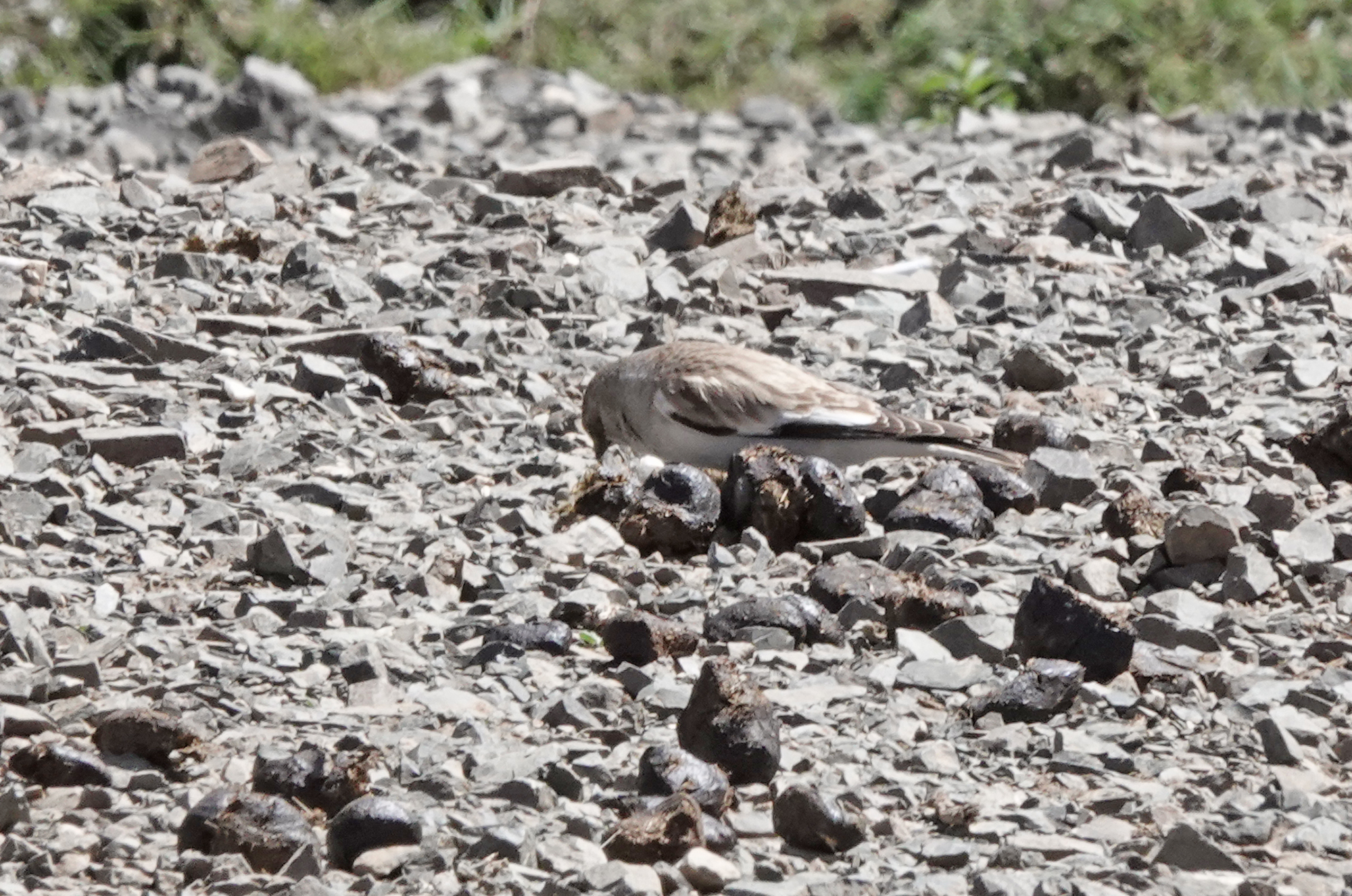
When I first came up with the idea for this post, I used slightly stronger language, something to the effect of "Put Down the Freaking Camera and Look at the Gosh darn Bird." Fortunately, I re-thought that, but I am still thinking it.
You probably think I am anti-photography. Nothing could be further from the truth. I take photos. I take and post way too many photos. It is really enjoyable to get positive feedback on a photo of a bird. I also love looking at my pictures and remembering trips I have taken. So, why the negative title? Because I feel that photography has hurt my birding skills in some ways and I also feel it inhibits the progress of new birders. Let me tell you why.
When I was a new birder I remember more experienced people telling me to leave my field guide in the car. This seemed counterintuitive to me. If I didn't look at the book, how could I tell what the bird was? So this is what would happen-I would see a bird and grab the book, flipping through pages feverishly looking for a brown bird. I would look back up to see if the bird had a white throat and it would be gone. I would realize that I had missed all the important field marks. So, I started leaving the book in the car and made note of everything I could see on the bird. I also paid attention to how it moved, how it was shaped overall, it may sound weird, but how it felt. I started being able to say "Ok, this is a warbler," or "This is a sparrow." I didn't throw away the book. I spent hours pouring over it when I was at home. I didn't just look at the pictures, but I paid attention to the maps and actually read the text. It took time, but I improved.
How does this relate to taking photos? You may say, "But a picture captures the field marks better than my mind and it is easier to ID." Perhaps, but if you don't actually pay attention to what the bird is doing, how it moves, how it feeds, how it relates to other birds, you won't get to know the bird. It is kind of like the difference between a parent and a school photographer. You can tell who a child is by his photo, but do you know him? Would you recognize him in the mall, or running up to your car? I see a lot of new birders posting photos saying "What is this?" That is fine, but they are posting pictures of the same birds over and over. They don't seem to progress in learning that the dull winter warbler is an Orange-crowned, or that the hawk they see that doesn't look exactly like the photo in their one field guide is a Red-tailed. This is normal for a very new birder, but it seems to go on much too long in people who use a camera lens rather than binocular to look at birds.
I have even noticed this in my own birding. I sometimes pay way too much attention to getting a good shot, rather than enjoying and watching the bird. It takes time to get the exposure right, to set the correct ISO, to find the right composition. I have started to lose the ability to get a glimpse of a bird and narrow it down quickly to a small number of species, or even the exact bird. I am hating that, so, I am trying to take fewer photos. The only time I make a big effort is if it is a bird that needs documenting or it is flirting, daring me to take its picture. I don't want to regress. I want to really know the birds. I am a fairly experienced birder. So, if photography is an impairment to me, how much more an impairment is it to a newbie?
Birds are so worth knowing and loving. It is absolutely worth becoming a good birder. I wish I was better. I strongly encourage you to become a birder, not just a photographer. Spend 99% more time just looking at the birds, rather than photographing them, at least initially. You might miss a few IDs, but you will get to know the beauty of our avian co-inhabitants of this world. You will have fewer compliments on your camera skills, but you will have a wonderful relationship that will last your lifetime.
Friday, February 15, 2013
Tuesday, January 22, 2013
Because It's Fun
There are so many things I enjoy about birding. I love observing different behaviors. I love the feeling of accomplishment when I am able to identify a sparrow or a shorebird that was a challenge in the past. I love knowing where migrants came from and where they are going. I love feeling connected with the natural world. I also love chasing.
If you are not a birder you probably have no idea what I am talking about. Chasing, or twitching, as they call it in the UK, is when you hear about a rare bird that has turned up and you jump in the car with whoever you can find that wants to go and make the trip to see it. It might involve driving all night. It might even involve flights if you have the money or the frequent flyer miles. It is usually for a bird you have never seen, though I have chased birds that I just want to see again.
Why do I do it? The main answer is in the title of this blog, because it's fun. The trip out is always a mix of excitement, anticipation and dread that the bird won't be there. If you have the right companions the conversation is all over the map, usually about past chases and produces laughter to the point of tears. (If you don't have the right companions, you will at least have some stories to tell later about how awful they were, which can also be fun.) You have an excuse to eat fast food that is bad for you, but you secretly love, drink too much coffee and maybe even drive a bit too fast.
When you arrive at the spot, you look for other birders and the conversations start. Have you seen it? Was it seen yesterday? Where? Hopefully, it is easily seen and you can relax. Many times you have to work for it. There is nothing like being the first person in the crowd to see the bird early in the morning. The elation is almost palpable. On some chases it takes a long time. People trade cell phone numbers and go off looking in likely places nearby. If you phone rings, your heart almost stops. Sometimes you realize you aren't going to see the bird. That sucks. Big time.
In spite of that, it is still fun. It is great to run into old friends. The sense of camaraderie can lead to making new friends. Maybe someone is there you have always wanted to meet, a birding celebrity. (The fame of birding celebrities is pretty limited, by the way.) You can either share the joy or the agony. Information about other birding spots is exchanged, new equipment is discussed, even a little gossip is spread.
Another thing that happens is you get to bird in an area you normally don't get to visit. I really love it if it is someplace I have never been. Many times the influx of birders results in more good birds being found, something birders refer to at the Patagonia Picnic Table Effect, http://en.wikipedia.org/wiki/Patagonia_picnic_table_effect. The longest chase we have ever done was for an Ivory Gull in Plymouth MA. We had never even talked about doing a trip to the Boston area in winter, but because of the chase, we not only got the gull, but saw a bunch of alcids, a ton of gulls that we rarely get in Texas and some seals! (I don't just like birds and we don't get seals in Texas.)
Anyway, the reason I am writing this is I have seen a lot of disparaging remarks about chasers recently. Today on Texbirds there was a post about woodpecker behavior that said "Not for chasers and listers", like we are so shallow that we don't care about other aspects of birds and birding. I would never think of adding "Not for people with bird feeders" or "Not for biologists" on my posts about rarities. I have seen people rail against chasers for any number of perceived sins, like not finding their own birds, being competitive and valuing their lists too much. I say to these people, "So what? I enjoy it. I am not going to let your snobbishness spoil my fun."
If you are not a birder you probably have no idea what I am talking about. Chasing, or twitching, as they call it in the UK, is when you hear about a rare bird that has turned up and you jump in the car with whoever you can find that wants to go and make the trip to see it. It might involve driving all night. It might even involve flights if you have the money or the frequent flyer miles. It is usually for a bird you have never seen, though I have chased birds that I just want to see again.
Why do I do it? The main answer is in the title of this blog, because it's fun. The trip out is always a mix of excitement, anticipation and dread that the bird won't be there. If you have the right companions the conversation is all over the map, usually about past chases and produces laughter to the point of tears. (If you don't have the right companions, you will at least have some stories to tell later about how awful they were, which can also be fun.) You have an excuse to eat fast food that is bad for you, but you secretly love, drink too much coffee and maybe even drive a bit too fast.
When you arrive at the spot, you look for other birders and the conversations start. Have you seen it? Was it seen yesterday? Where? Hopefully, it is easily seen and you can relax. Many times you have to work for it. There is nothing like being the first person in the crowd to see the bird early in the morning. The elation is almost palpable. On some chases it takes a long time. People trade cell phone numbers and go off looking in likely places nearby. If you phone rings, your heart almost stops. Sometimes you realize you aren't going to see the bird. That sucks. Big time.
In spite of that, it is still fun. It is great to run into old friends. The sense of camaraderie can lead to making new friends. Maybe someone is there you have always wanted to meet, a birding celebrity. (The fame of birding celebrities is pretty limited, by the way.) You can either share the joy or the agony. Information about other birding spots is exchanged, new equipment is discussed, even a little gossip is spread.
Another thing that happens is you get to bird in an area you normally don't get to visit. I really love it if it is someplace I have never been. Many times the influx of birders results in more good birds being found, something birders refer to at the Patagonia Picnic Table Effect, http://en.wikipedia.org/wiki/Patagonia_picnic_table_effect. The longest chase we have ever done was for an Ivory Gull in Plymouth MA. We had never even talked about doing a trip to the Boston area in winter, but because of the chase, we not only got the gull, but saw a bunch of alcids, a ton of gulls that we rarely get in Texas and some seals! (I don't just like birds and we don't get seals in Texas.)
Anyway, the reason I am writing this is I have seen a lot of disparaging remarks about chasers recently. Today on Texbirds there was a post about woodpecker behavior that said "Not for chasers and listers", like we are so shallow that we don't care about other aspects of birds and birding. I would never think of adding "Not for people with bird feeders" or "Not for biologists" on my posts about rarities. I have seen people rail against chasers for any number of perceived sins, like not finding their own birds, being competitive and valuing their lists too much. I say to these people, "So what? I enjoy it. I am not going to let your snobbishness spoil my fun."
Wednesday, January 16, 2013
Wow, I Didn't Expect to See That Bird!
We discussed where we wanted to start the day. Martin was pulling for Frijole Ranch to try again for the titmouse and Willie wanted to go back to Red Bluff. The winds were supposed to increase through out the day, so we decided that we should hit Red Bluff before they got out of hand. Red Bluff Reservoir is one of the best birding spots in Texas that hardly anyone visits. It the desert of west Texas water is at a premium and Red Bluff has plenty. It is way off the beaten track, but we try to get there at least once a year now.
We set up on the west side of the lake, where there is a picnic ground. The light was good and the wind was not bad at all. We quickly saw a handful of Common Mergansers by the dam. There were also some Hooded Mergansers and a few Red-breasteds. It is tough in Texas to find all three species in the same spot. Willie spotted a pair of Red-throated Loons; there was a pair two years before and we thought they might be the same birds. There was a massive raft of ducks at the north end of the lake. As they moved closer we could see it was almost all Common Mergansers. Martin and Willie estimated at least 1.900, which is more than any of us had seen at one time. We decided to hit the east side of the lake, but were deeply disappointed to find the Sandy Beach area gated and locked. There is an huge amount of fracking going on around the lake, so we wondered if the land owner wanted to keep the workers out.
We went back around to the other side and scoped some more. The wind was picking up and it was fairly cold. We decided to hit the north side of the lake and drove down to the other entrance. As we were driving towards the lake edge a black, gray and white bird shot in front of us, a shrike. The bird lit and we were stunned to see it was an immature Northern, not the expected Loggerhead. We drove in as close as we could, but the bird was very skittish. Martin and Willie walked out into the field, circling around in order to not spook the bird, but trying to get a bit closer. I stayed at the car, in case it flew back to its original perch. Unfortunately, it eluded all of us, but Martin was able to get some record shots, which he has posted on his page. http://www.martinreid.com/Main%20website/NShrike.html The photos of our bird are on the bottom of the page. This bird was the first Northern Shrike recorded in the Trans-Pecos in 25 years! With the birds we had seen in the Panhandle in December, it was the seventh one in about a month. Considering we had never seen any in the state before, we were "gobsmacked", as Martin would say. When we had returned from the panhandle in December, I mentioned that with all of the birds we had seen, it looked like it was possibly going to be an irruptive year. With one that was seen in north central Texas yesterday, it appears that I was right.
We decided to spend the night in Alpine and started driving south. We made a stop at Lake Balmorhea, where we were very happy to see 37 more Common Mergansers. We hadn't seen any on this lake in a couple of years. Two Green-tailed Towhees popped up to check us out, glowing in the late afternoon sun. We drove to the north side of the lake, where Western and Clark Grebes were in good numbers. The sun had set, so we started to head out. We were thrilled to see a Great Horned Owl sitting up on a dead tree. Any owl is nice, but this one was special. Tripp Davenport had found it a couple of months earlier. It was almost white, instead of the normal gray or brown. We had looked for it in November without any luck, so we were really happy to see it! It allowed us to get quite close and get decent photos, despite the low light. It almost trumped, but not quite, the Northern Shrike, as bird of the day.
We set up on the west side of the lake, where there is a picnic ground. The light was good and the wind was not bad at all. We quickly saw a handful of Common Mergansers by the dam. There were also some Hooded Mergansers and a few Red-breasteds. It is tough in Texas to find all three species in the same spot. Willie spotted a pair of Red-throated Loons; there was a pair two years before and we thought they might be the same birds. There was a massive raft of ducks at the north end of the lake. As they moved closer we could see it was almost all Common Mergansers. Martin and Willie estimated at least 1.900, which is more than any of us had seen at one time. We decided to hit the east side of the lake, but were deeply disappointed to find the Sandy Beach area gated and locked. There is an huge amount of fracking going on around the lake, so we wondered if the land owner wanted to keep the workers out.
We went back around to the other side and scoped some more. The wind was picking up and it was fairly cold. We decided to hit the north side of the lake and drove down to the other entrance. As we were driving towards the lake edge a black, gray and white bird shot in front of us, a shrike. The bird lit and we were stunned to see it was an immature Northern, not the expected Loggerhead. We drove in as close as we could, but the bird was very skittish. Martin and Willie walked out into the field, circling around in order to not spook the bird, but trying to get a bit closer. I stayed at the car, in case it flew back to its original perch. Unfortunately, it eluded all of us, but Martin was able to get some record shots, which he has posted on his page. http://www.martinreid.com/Main%20website/NShrike.html The photos of our bird are on the bottom of the page. This bird was the first Northern Shrike recorded in the Trans-Pecos in 25 years! With the birds we had seen in the Panhandle in December, it was the seventh one in about a month. Considering we had never seen any in the state before, we were "gobsmacked", as Martin would say. When we had returned from the panhandle in December, I mentioned that with all of the birds we had seen, it looked like it was possibly going to be an irruptive year. With one that was seen in north central Texas yesterday, it appears that I was right.
We decided to spend the night in Alpine and started driving south. We made a stop at Lake Balmorhea, where we were very happy to see 37 more Common Mergansers. We hadn't seen any on this lake in a couple of years. Two Green-tailed Towhees popped up to check us out, glowing in the late afternoon sun. We drove to the north side of the lake, where Western and Clark Grebes were in good numbers. The sun had set, so we started to head out. We were thrilled to see a Great Horned Owl sitting up on a dead tree. Any owl is nice, but this one was special. Tripp Davenport had found it a couple of months earlier. It was almost white, instead of the normal gray or brown. We had looked for it in November without any luck, so we were really happy to see it! It allowed us to get quite close and get decent photos, despite the low light. It almost trumped, but not quite, the Northern Shrike, as bird of the day.
Tuesday, January 15, 2013
January West Texas, Days 1 and 2- Great Birds and Snow!
I ended up with a few days off in January. I love starting the year off with some great birds, so it was obvious what I wanted to do. The question was where. West Texas has great appeal to me, but we had a great trip to the panhandle in December, so that was tempting, too. Martin and I discussed it and finally decided on hitting the Guadalupe Mountains. Our good friend Willie Sekula asked if he could join us.
We left on January 9 early in the morning in the rain. Our first stop was Red Bluff Reservoir, a under birded lake just south of the New Mexico border. I was trying to be Pollyanna Positive, watching the weather on my phone and saying it looked like the lake was not going to have rain. It is a long drive out and the weather didn't improve in the slightest. We arrived and the rain was steady and very cold, almost sleet. The wind was nasty and we were less than enthused. We scanned the lake from the west shore, but between the rain, the wind and the cold, we gave up pretty quickly. There were some gulls and ducks on the lake, but we figured it would be more productive to head to Frijole Ranch at Guadalupe Mountain National Park.
Martin's main target species was Juniper Titmouse. The Guads are the almost only place in Texas to get this species. He had tried numerous times without success. Frijole Ranch and the headquarters building are considered good places to see it. Unfortunately, the weather was just as nasty. We walked around the headquarters and saw a few Phainopeplas, some Western Scrub Jays and a few other expected passerines. A group of jays were mobbing a hawk that Martin flushed, but couldn't get a solid ID on. Frijole Ranch was just as cold and just as titmouse-less. We drove up to Carlsbad to spend the next two nights.
The best place in the park for Juniper Titmouse is Dog Canyon. This is a tough area to reach. You have to drive almost 60 miles from Carlsbad, through New Mexico, to reach this area. The state line is the entrance to the park. This is where I got my Texas Juniper Titmouse a couple of years ago. The drive in was complicated by several inches of snow on the road in the higher areas. It was a bit nerve wracking, but we finally arrived. There was a couple inches of snow on the ground in the park. We got out and started working the area past the headquarters. Martin and I walked down hill, listening for his titmouse. Willie stayed up near the parking lot. I was really enjoying the snow!
We walked back up and found Willie, looking up at the top of a tree. Perched up high was a female Evening Grosbeak. This bird was recently put on the Texas review list, as they had become extremely difficult to find. It was a new state bird for me, so I was ecstatic! Unfortunately, the rest of the flock consisted of only Dark-eyed Juncos of various types and Chipping Sparrows. Martin had seen Evening Grosbeak in Texas, so while very happy to see this one, he still was most interested in finding a titmouse.
We decided to hike the trail up the canyon. We were rewarded with a good number of birds. Probably our favorites were a group of Stellar's Jays, a tough bird to see in Texas. We had a single Mountain Chickadee and tons more juncos. We also heard what we thought were a couple more Evening Grosbeaks. We probably hiked about three quarters of a mile when things got very quiet. We continued a bit further, but things were still very slow. We turned back and ran into some of the same birds going down hill.
When we neared the corral area, which is at the end of the trail, I was lagging behind a bit. I could hear Willie saying something to Martin, but couldn't make it out. Then I heard a low slow tooting. I called out "Isn't that a pygmy-owl?" Willie had just said the same thing to Martin. The call sounded like it was about 100 yards from me. The sound was coming from some pine trees in an area that was rather difficult to get to. The calling continued for a couple of minutes, and then stopped. Martin and Willie worked their way downhill and I walked around the top of the ridge, searching the pines. Despite searching very diligently we couldn't find the owl. We had seen a bird fly from the pines, but only got a very brief, occluded view. It was more than frustrating. Northern Pygmy-Owl is a review species. We went back to the car and made lunch. We listened to a tape of the owl's call and agreed that it was what we heard. We returned again to the area, but never saw an owl.
We worked the area around the headquarters some more and still came up titmouse-less. Poor Martin wasn't very happy. Finally we decided to head back. Along the way we had huge flocks of Pine Siskins, Western Bluebirds, and more juncos. Luckily, the snow was almost gone on the road. We checked a lake in Carlsbad, but it was less than productive, with only coots and a few dabbling ducks.
I do need to add that Cameron Carver went back and heard the same call that we had. He recorded it on his phone. It turns out it might have been a Gray-footed Chipmunk. Several people are working on the tape and because of the questions, I am not counting the owl, yet. Gray-footed Chipmunks hibernate, so it seems doubtful to me, but I would rather err on the side of caution.
We left on January 9 early in the morning in the rain. Our first stop was Red Bluff Reservoir, a under birded lake just south of the New Mexico border. I was trying to be Pollyanna Positive, watching the weather on my phone and saying it looked like the lake was not going to have rain. It is a long drive out and the weather didn't improve in the slightest. We arrived and the rain was steady and very cold, almost sleet. The wind was nasty and we were less than enthused. We scanned the lake from the west shore, but between the rain, the wind and the cold, we gave up pretty quickly. There were some gulls and ducks on the lake, but we figured it would be more productive to head to Frijole Ranch at Guadalupe Mountain National Park.
Martin's main target species was Juniper Titmouse. The Guads are the almost only place in Texas to get this species. He had tried numerous times without success. Frijole Ranch and the headquarters building are considered good places to see it. Unfortunately, the weather was just as nasty. We walked around the headquarters and saw a few Phainopeplas, some Western Scrub Jays and a few other expected passerines. A group of jays were mobbing a hawk that Martin flushed, but couldn't get a solid ID on. Frijole Ranch was just as cold and just as titmouse-less. We drove up to Carlsbad to spend the next two nights.
The best place in the park for Juniper Titmouse is Dog Canyon. This is a tough area to reach. You have to drive almost 60 miles from Carlsbad, through New Mexico, to reach this area. The state line is the entrance to the park. This is where I got my Texas Juniper Titmouse a couple of years ago. The drive in was complicated by several inches of snow on the road in the higher areas. It was a bit nerve wracking, but we finally arrived. There was a couple inches of snow on the ground in the park. We got out and started working the area past the headquarters. Martin and I walked down hill, listening for his titmouse. Willie stayed up near the parking lot. I was really enjoying the snow!
We walked back up and found Willie, looking up at the top of a tree. Perched up high was a female Evening Grosbeak. This bird was recently put on the Texas review list, as they had become extremely difficult to find. It was a new state bird for me, so I was ecstatic! Unfortunately, the rest of the flock consisted of only Dark-eyed Juncos of various types and Chipping Sparrows. Martin had seen Evening Grosbeak in Texas, so while very happy to see this one, he still was most interested in finding a titmouse.
We decided to hike the trail up the canyon. We were rewarded with a good number of birds. Probably our favorites were a group of Stellar's Jays, a tough bird to see in Texas. We had a single Mountain Chickadee and tons more juncos. We also heard what we thought were a couple more Evening Grosbeaks. We probably hiked about three quarters of a mile when things got very quiet. We continued a bit further, but things were still very slow. We turned back and ran into some of the same birds going down hill.
When we neared the corral area, which is at the end of the trail, I was lagging behind a bit. I could hear Willie saying something to Martin, but couldn't make it out. Then I heard a low slow tooting. I called out "Isn't that a pygmy-owl?" Willie had just said the same thing to Martin. The call sounded like it was about 100 yards from me. The sound was coming from some pine trees in an area that was rather difficult to get to. The calling continued for a couple of minutes, and then stopped. Martin and Willie worked their way downhill and I walked around the top of the ridge, searching the pines. Despite searching very diligently we couldn't find the owl. We had seen a bird fly from the pines, but only got a very brief, occluded view. It was more than frustrating. Northern Pygmy-Owl is a review species. We went back to the car and made lunch. We listened to a tape of the owl's call and agreed that it was what we heard. We returned again to the area, but never saw an owl.
We worked the area around the headquarters some more and still came up titmouse-less. Poor Martin wasn't very happy. Finally we decided to head back. Along the way we had huge flocks of Pine Siskins, Western Bluebirds, and more juncos. Luckily, the snow was almost gone on the road. We checked a lake in Carlsbad, but it was less than productive, with only coots and a few dabbling ducks.
I do need to add that Cameron Carver went back and heard the same call that we had. He recorded it on his phone. It turns out it might have been a Gray-footed Chipmunk. Several people are working on the tape and because of the questions, I am not counting the owl, yet. Gray-footed Chipmunks hibernate, so it seems doubtful to me, but I would rather err on the side of caution.
Sunday, December 9, 2012
Birding the Texas Panhandle, December 1-4, 2012
Last week Martin and I did a three and a half day trip to the
panhandle. The weather was surprisingly warm. In December I expect to
freeze my toes off, but the temperatures were in the high 60s, maybe
70s. I believe the lack of cold weather effected duck numbers
dramatically, but despite this we did quite well.
Our first stop was in Lubbock county, on Saturday December 1 at about 11AM., where we saw the Northern Shrike that Cameron Carver had found the day before. The bird put on a great show, including grabbing an unidentified sparrow out of the brush under the tree where we found him. We also visited the Becta Cemetery Playa, which is nearby, where Steve Collins had all four longspur species that same day. We did see clouds of longspurs coming in to drink, but could only pick out Laplands and McCowns. Driving north we found numerous flocks of "white-cheeked" geese, finding both Cackling and Canadas.
We drove up to Fritch, which is on the east side of Lake Meridith, where we met Barrett Pierce, who was unbelievably gracious enough to accompany us for that afternoon and the next day. Barrett has a wealth of knowledge both about the birds and the panhandle itself. We can never thank him enough! We started birding in Fritch itself, where we found an aberrant House Finch with a pink head! It was a really striking bird, closely resembling the old world species, Long-tailed Rosefinch. Other passerines included a good number of American Robins, Cedar Waxwings, Dark-eyed Juncos and Blue Jays, which were a bit of a surprise for me. We had hoped to find something a bit rarer, like a Bohemian Waxwing, but had no luck.
We skirted the shore of the lake moving from Fritch up to the dam, making several stops. The water levels were frighteningly low. We had some ducks, including Common Golden-eye and a Greater Scaup up by the dam. What we didn't see were any Common Mergansers, which should live up to the name Common in December. We found several American Tree Sparrows at the Cedar Canyon boat launch area. White-crowned Sparrows were abundant. Barrett told us there is a Golden Eagle that frequents the area around the lake, but all we saw were Balds. Some Ring-billed, Herring and Bonaparte's Gulls were loafing in several locations. I saw a distant shrike that I was unable to identify; Barrett said it could have been a Northern, as one had frequented that area in the past. As we were driving from Cedar Canyon to the dam we saw a Loggerhead Shrike, one of only two we saw on the entire panhandle trip.
We spent the night in Dumas and started birding before dawn, looking for Short-eared Owl between Dumas and Dalhart. We spotted a rather distant bird, flying to its day time roost at dawn. Barrett drove us around some ranch land, where we were very happy to find an adult Golden Eagle. A small prairie dog town produced a Burrowing Owl. We worked very hard looking for a Ring-necked Pheasant, with no luck. Barrett said three years of no spring rain had caused the population to crash. December 1st is the opening date of pheasant season, but most of the hunters were going home empty handed. Large flocks of longspurs and Horned Larks were moving in the fields.
We went to Rita Blanca Lake in Dalhart, where we ran into Dan Jones from the valley. Dan had found American Tree Sparrows. He had been in the panhandle for a couple of days and we traded information. The lake was pretty quiet, though large flocks of Snow, Ross, Canada and Cackling Geese were moving around. Right after Dan left Barrett spotted a shrike in a tree behind the lake access. Martin and I had gone to look for a restroom, and it had flown into a bank of trees out of sight from where we were. We drove up to a better vantage point and re-found it. It was another Northern. We then birded a neighborhood where Barrett has had good luck finding rarities. We found at least six Red-breasted Nuthatches, like everywhere else in the state. Probably the best bird was a Red-bellied Woodpecker, which we saw very well. After lunch we drove up to Cactus to visit the playa. Tragically, the powers that be have decided to no longer keep water in the playa and it is
now dry. We found yet another Northern Shrike northwest of Dumas just east of where FM 281 meets RR 807. There were still no pheasants to be found. Barrett and we parted company in the late afternoon.
The following morning, December 3, we took off for Palo Duro Reservoir, which proved to be very productive. Before reaching Spearman, we flushed a dark-morph Ferruginous Hawk off of a telephone pole. It dipped its wing, pointing to the only pheasants we saw, a pair right by the road. When we reached the reservoir we birded the park below the dam, which was really nice. We had great looks at a Townsend's Solitaire. Large flocks of American Robins, along with American Gold Finches, Pine Siskins and Northern Cardinals were visiting a small fishing pond to drink. We also had a confiding Marsh Wren. We were very excited to find Northern Shrike # 4 for the trip in this area, a young bird that looked quite brown underneath, when we saw it perched high in a tree. Interestingly, it flew in to a closer area and at that distance it didn't look nearly as brown. A small group of American Tree Sparrows was in the area. We crossed over to the lake side, where we found
Northern Shrike #5. This lake is also extremely low. We had a few common ducks, but didn't expect to find any birds usually associated with deeper water. While scanning the water Martin spotted a Pacific Loon. The rear part of the neck on this bird was light gray like in breeding plumage, not the darker color we would expect. There were still no Common Mergansers.
We visited the Ochiltree Cemetery, where we were very pleased to find a Sage Thrasher coming out from an Arborvitae shrub on to the grass. We found another Thrasher that amused us greatly,
www.flickr.com/photos/sngcanary/8257580259
We also found our only hummer of the trip http://www.flickr.com/photos/sngcanary/8257580409
We ended the day back at Lake Meridith, where we FINALLY found three female Common Mergansers at Cedar Canyon. While driving up to the dam, we found ANOTHER Northern Shrike, #6. This seemed extraordinary to us, as we had not covered that much territory. We had looked for them a couple of times in the past with no luck. In talking to several long time state birders, they also thought it was exceptional. I would suggest checking any shrike in North Central Texas this year, it might be the year for one. When we reached the dam, Martin spotted a pair of Long-tailed Ducks moving toward the dam, which was a great finish to the day. Barrett told Martin at least one was still present today.
We briefly looked for Lesser Prairie Chickens near Glazier on Dec. 4, but, not unexpectedly, didn't see any. We left as soon as we heard about the Red-necked Grebe in Dallas, but unfortunately, got the news too late to make it that day, and missed it. We found no unusual finches in any of the towns. We need to invest in some feeders to distribute up there! We saw almost no feeders at all. I want to strongly encourage you to visit the panhandle in winter. There were more than a few great raptors, including Prairie Falcon, Merlin, Rough-legged Hawk, Ferruginous Hawk and Harlan's Hawk, not to mention both species of eagles and more Red-tails than you can shake a stick at. It is very worth while. There is ample opportunity to find some great birds. It is way past time that someone finds Texas' first Rosy Finch!
Photos taken - http://www.flickr.com/photos/sngcanary/sets/72157632208652080/
Bird list-
Snow Goose
Ross's Goose
Cackling Goose
Canada Goose
Northern Harrier
Red-tailed Hawk
American Kestrel
Eurasian Collared-Dove
Mourning Dove
Northern Shrike
White-crowned Sparrow
Dark-eyed Junco
Western Meadowlark
Great-tailed Grackle
House Sparrow
Gadwall
Mallard
Northern Shoveler
Northern Pintail
Green-winged Teal
Canvasback
Greater Scaup
Lesser Scaup
Long-tailed Duck
Bufflehead
Common Goldeneye
Hooded Merganser
Common Merganser
Ruddy Duck
Pied-billed Grebe
Horned Grebe
Double-crested CormorantG
Great Blue Heron
Bald Eagle
Sharp-shinned Hawk
Cooper's Hawk
Ferruginous Hawk
Rough-legged Hawk
Merlin
Peregrine Falcon
American Coot
Killdeer
Greater Yellowlegs
Least Sandpiper
Bonaparte's Gull
Ring-billed Gull
Herring Gull
White-winged Dove
Chihuahuan Raven
Horned Lark
Ruby-crowned Kinglet
Eastern Bluebird
Mountain Bluebird
American Robin
American Tree Sparrow
Chipping Sparrow
Song Sparrow
Northern Cardinal
Eastern Meadowlark
House Finch
Lesser Goldfinch
American Goldfinch
Our first stop was in Lubbock county, on Saturday December 1 at about 11AM., where we saw the Northern Shrike that Cameron Carver had found the day before. The bird put on a great show, including grabbing an unidentified sparrow out of the brush under the tree where we found him. We also visited the Becta Cemetery Playa, which is nearby, where Steve Collins had all four longspur species that same day. We did see clouds of longspurs coming in to drink, but could only pick out Laplands and McCowns. Driving north we found numerous flocks of "white-cheeked" geese, finding both Cackling and Canadas.
We drove up to Fritch, which is on the east side of Lake Meridith, where we met Barrett Pierce, who was unbelievably gracious enough to accompany us for that afternoon and the next day. Barrett has a wealth of knowledge both about the birds and the panhandle itself. We can never thank him enough! We started birding in Fritch itself, where we found an aberrant House Finch with a pink head! It was a really striking bird, closely resembling the old world species, Long-tailed Rosefinch. Other passerines included a good number of American Robins, Cedar Waxwings, Dark-eyed Juncos and Blue Jays, which were a bit of a surprise for me. We had hoped to find something a bit rarer, like a Bohemian Waxwing, but had no luck.
We skirted the shore of the lake moving from Fritch up to the dam, making several stops. The water levels were frighteningly low. We had some ducks, including Common Golden-eye and a Greater Scaup up by the dam. What we didn't see were any Common Mergansers, which should live up to the name Common in December. We found several American Tree Sparrows at the Cedar Canyon boat launch area. White-crowned Sparrows were abundant. Barrett told us there is a Golden Eagle that frequents the area around the lake, but all we saw were Balds. Some Ring-billed, Herring and Bonaparte's Gulls were loafing in several locations. I saw a distant shrike that I was unable to identify; Barrett said it could have been a Northern, as one had frequented that area in the past. As we were driving from Cedar Canyon to the dam we saw a Loggerhead Shrike, one of only two we saw on the entire panhandle trip.
We spent the night in Dumas and started birding before dawn, looking for Short-eared Owl between Dumas and Dalhart. We spotted a rather distant bird, flying to its day time roost at dawn. Barrett drove us around some ranch land, where we were very happy to find an adult Golden Eagle. A small prairie dog town produced a Burrowing Owl. We worked very hard looking for a Ring-necked Pheasant, with no luck. Barrett said three years of no spring rain had caused the population to crash. December 1st is the opening date of pheasant season, but most of the hunters were going home empty handed. Large flocks of longspurs and Horned Larks were moving in the fields.
We went to Rita Blanca Lake in Dalhart, where we ran into Dan Jones from the valley. Dan had found American Tree Sparrows. He had been in the panhandle for a couple of days and we traded information. The lake was pretty quiet, though large flocks of Snow, Ross, Canada and Cackling Geese were moving around. Right after Dan left Barrett spotted a shrike in a tree behind the lake access. Martin and I had gone to look for a restroom, and it had flown into a bank of trees out of sight from where we were. We drove up to a better vantage point and re-found it. It was another Northern. We then birded a neighborhood where Barrett has had good luck finding rarities. We found at least six Red-breasted Nuthatches, like everywhere else in the state. Probably the best bird was a Red-bellied Woodpecker, which we saw very well. After lunch we drove up to Cactus to visit the playa. Tragically, the powers that be have decided to no longer keep water in the playa and it is
now dry. We found yet another Northern Shrike northwest of Dumas just east of where FM 281 meets RR 807. There were still no pheasants to be found. Barrett and we parted company in the late afternoon.
The following morning, December 3, we took off for Palo Duro Reservoir, which proved to be very productive. Before reaching Spearman, we flushed a dark-morph Ferruginous Hawk off of a telephone pole. It dipped its wing, pointing to the only pheasants we saw, a pair right by the road. When we reached the reservoir we birded the park below the dam, which was really nice. We had great looks at a Townsend's Solitaire. Large flocks of American Robins, along with American Gold Finches, Pine Siskins and Northern Cardinals were visiting a small fishing pond to drink. We also had a confiding Marsh Wren. We were very excited to find Northern Shrike # 4 for the trip in this area, a young bird that looked quite brown underneath, when we saw it perched high in a tree. Interestingly, it flew in to a closer area and at that distance it didn't look nearly as brown. A small group of American Tree Sparrows was in the area. We crossed over to the lake side, where we found
Northern Shrike #5. This lake is also extremely low. We had a few common ducks, but didn't expect to find any birds usually associated with deeper water. While scanning the water Martin spotted a Pacific Loon. The rear part of the neck on this bird was light gray like in breeding plumage, not the darker color we would expect. There were still no Common Mergansers.
We visited the Ochiltree Cemetery, where we were very pleased to find a Sage Thrasher coming out from an Arborvitae shrub on to the grass. We found another Thrasher that amused us greatly,
www.flickr.com/photos/sngcanary/8257580259
We also found our only hummer of the trip http://www.flickr.com/photos/sngcanary/8257580409
We ended the day back at Lake Meridith, where we FINALLY found three female Common Mergansers at Cedar Canyon. While driving up to the dam, we found ANOTHER Northern Shrike, #6. This seemed extraordinary to us, as we had not covered that much territory. We had looked for them a couple of times in the past with no luck. In talking to several long time state birders, they also thought it was exceptional. I would suggest checking any shrike in North Central Texas this year, it might be the year for one. When we reached the dam, Martin spotted a pair of Long-tailed Ducks moving toward the dam, which was a great finish to the day. Barrett told Martin at least one was still present today.
We briefly looked for Lesser Prairie Chickens near Glazier on Dec. 4, but, not unexpectedly, didn't see any. We left as soon as we heard about the Red-necked Grebe in Dallas, but unfortunately, got the news too late to make it that day, and missed it. We found no unusual finches in any of the towns. We need to invest in some feeders to distribute up there! We saw almost no feeders at all. I want to strongly encourage you to visit the panhandle in winter. There were more than a few great raptors, including Prairie Falcon, Merlin, Rough-legged Hawk, Ferruginous Hawk and Harlan's Hawk, not to mention both species of eagles and more Red-tails than you can shake a stick at. It is very worth while. There is ample opportunity to find some great birds. It is way past time that someone finds Texas' first Rosy Finch!
Photos taken - http://www.flickr.com/photos/sngcanary/sets/72157632208652080/
Bird list-
Snow Goose
Ross's Goose
Cackling Goose
Canada Goose
Northern Harrier
Red-tailed Hawk
American Kestrel
Eurasian Collared-Dove
Mourning Dove
Northern Shrike
White-crowned Sparrow
Dark-eyed Junco
Western Meadowlark
Great-tailed Grackle
House Sparrow
Gadwall
Mallard
Northern Shoveler
Northern Pintail
Green-winged Teal
Canvasback
Greater Scaup
Lesser Scaup
Long-tailed Duck
Bufflehead
Common Goldeneye
Hooded Merganser
Common Merganser
Ruddy Duck
Pied-billed Grebe
Horned Grebe
Double-crested CormorantG
Great Blue Heron
Bald Eagle
Sharp-shinned Hawk
Cooper's Hawk
Ferruginous Hawk
Rough-legged Hawk
Merlin
Peregrine Falcon
American Coot
Killdeer
Greater Yellowlegs
Least Sandpiper
Bonaparte's Gull
Ring-billed Gull
Herring Gull
White-winged Dove
Chihuahuan Raven
Horned Lark
Ruby-crowned Kinglet
Eastern Bluebird
Mountain Bluebird
American Robin
American Tree Sparrow
Chipping Sparrow
Song Sparrow
Northern Cardinal
Eastern Meadowlark
House Finch
Lesser Goldfinch
American Goldfinch
Tuesday, May 29, 2012
Costa Rica- Day 6 and half, May 12-13, 2012
Sorry for the delay in my last blog entry for this trip. I was away for a few days in Big Bend.
My day at Punta Leona began very early, with a Ferruginous Pygmy-Owl calling outside of my room at about 3:00 AM. Luckily, it was a brief interlude. I woke up for the day a bit later than that and left the room to meet the rest of the group for a day of birding around the resort. Right outside the door a Long-tailed Hermit, a hummingbird, was feeding in the ginger growing by the patio.
We birded for around the hotel for a couple of hours, and then had breakfast. The open air restaurant was a great spot to see a few birds, but the big show was mammalian. First several Coatis came strolling by, very close to the tables. We were warned to not feed them, and I resisted temptation. They looked very healthy, so I think somebody was breaking the rules from time to time. Then a troop of White-faced Capuchin Monkeys arrived, including a mother with a very young baby on her back. I really struggled now to not slip them a few scraps. They didn't miss a beat; running up and snatching left overs out of the bucket the bus staff was scraping plates into. Patrick, our guide, bared his teeth at the mother, warning her not to jump up on his table.
We finally wrapped up and gathered our binoculars and other gear and headed out. We walked the main road into the resort, which I had mentioned in my last entry. Several trails go through these woods, and the birding can be very good. A Fiery Aracari hung high from an open tree branch. We very quickly found Black-hooded Antshrike, a bird confined to Costa Rica and Western Panama. Dot-winged Antwrens were quite common. I loved the Chestnut-backed Antbird, with the big blue bare area around the eyes, and this was just from the road! Henry pointed out a nesting box he had put up for the Scarlet Macaws and discussed the breeding population in the resort. Unfortunately, many of the boxes put up were upside down.
We reached one of the trails and headed into the forest. Our group was made up of people of varying ability, in terms of hiking and climbing. The trail had some steep bits, so we went slow, for which I was grateful! The sounds were incredible, especially the song of the Rufous-and-white Wren, which I want to add as a ring tone on my phone. A Rufous Piha gave us amazing looks. Several species of trogons and two tinamous called. It was shaping up to be a great morning. On the way back we spotted a King Vulture wheeling in the distance.
Connie had planned for lunch outside the resort, then some beach time, followed by a boat tour of the Tarcoles River. We were having so much fun, we were bit late for lunch, which didn't allow for beach time, at least for the group I was hanging with. I was fine with this; I prefer birding to beaches any day! Four of us went together for lunch at a little restaurant owned by an Australian couple, across the road from the Pacific. It was so cool to see Scarlet Macaws soaring next to Magnificent Frigatebirds! We shared a round of margaritas and the conversation became even wittier and more intelligent, at least it seemed that way.
When we got back to the hotel it was almost time for the boat trip. We gathered at the restaurant, where we had nice surprise. A couple of Gray-headed Tanagers announced the presence of an Army Ant swarm working the forested area next to the pool! A Tawny-winged Woodcreeper moved in. It was a small swarm and there were only a few birds, but it was still exciting.
The Tarcoles River is well known for the huge number of Crocodiles that live in its waters, but our targets were a few birds, most often seen on the river. Mangrove Hummingbird, Northern Scrub-Flycatcher and Boat-billed Herons are found on the river. It is also the best chance for Yellow-billed Cotinga. When we arrived at the boatman's place, we were delighted to find we were being joined by Richard Garriques, one of the authors of the Birds of Costa Rica and two men that he was guiding, who recognized me from Savegre Lodge.
The boat ride was great fun! Right out of the dock we got good looks at a Boat-billed Heron. A bit further down a large number of waders and shorebirds covered the sandbars. Common Black-Hawks were actually common. We pulled into a small creek mouth, where Mangrove Hummingbirds are usually found. Unfortunately, we never got a solid look at one. Several times hummingbirds shot through, but no one got decent enough looks to identify them. We then tried for Northern Scrub-Flycatcher, with equal bad luck. I did see some flycatchers on the opposite shore of the river, but I was not confident enough to ID them. Several times Plumbeous Kites soared overhead. Two Bare-throated Tiger-Herons, an immature and an adult, were on the bank. I did get one very important bird, at least to me, a Turquoise-browned Motmot. Yellow-naped Parrots perched in a dead tree.
We headed back to shore and split up into groups for dinner. My group found a great little seafood restaurant. The food was plentiful, cheap and very good! They did not have a liquor license, but one of the brothers who ran the place was happy to go to the store next door for cold beer. We finished up the meal with some great local ice cream bars. I was very happy to get to bed.
I am not doing a whole blog on Sunday morning, as I only had a brief time to bird before heading back to the airport. We were supposed to visit Carrara National Park, but there was some miscommunication, and the park opened too late for me to go. Some of us birded the road again, before breakfast. The biggest surprise was a Great Tinamou, that exploded in front us off of the side of the road. We also saw an Orange-collared Manakin, which we had only heard the day before. We enjoyed our last breakfast together. I had to cut out a bit early, as the shuttle bus was coming to take me to the airport. I really wish I had more time to bird that area.
I enjoyed Costa Rica so much! I would love to return and hit some areas that I missed, particularly the Caribbean side and the northern area. I got a lot of birds for just one week. I end this set of blogs with a very serious suggestion- Go someplace! Don't be afraid to leave the USA. It isn't any more expensive than traveling in the lower 48 and it will change your life for the better.
My few photos for the two days-
http://www.flickr.com/photos/sngcanary/sets/72157629959744802/
Great Tinamou
Little Tinamou-heard
Black-bellied Whistling-Duck
Crested Guan
Brown Pelican
Neotropic Cormorant
Anhinga
Magnificent Frigatebird
Bare-throated Tiger-Heron
Great Blue Heron
Great Egret
Snowy Egret
Little Blue Heron
Tricolored Heron
Cattle Egret
Green Heron
Yellow-crowned Night-Heron
Boat-billed Heron
White Ibis
Roseate Spoonbill
Wood Stork
Black Vulture
Turkey Vulture
King Vulture
Osprey
Plumbeous Kite
Common Black-Hawk
Yellow-headed Caracara
Laughing Falcon
Purple Gallinule
Black-bellied Plover
Black-necked Stilt
Northern Jacana
Spotted Sandpiper
Rock Pigeon
Red-billed Pigeon
Short-billed Pigeon
Inca Dove
Ruddy Ground-Dove
Scarlet Macaw
Crimson-fronted Parakeet
Orange-chinned Parakeet
White-fronted Parrot
Yellow-naped Parrot
Ferruginous Pygmy-Owl
Squirrel Cuckoo
Groove-billed Ani
Long-tailed Hermit
Stripe-throated Hermit
Scaly-breasted Hummingbird
Rufous-tailed Hummingbird
Black-throated Trogon
Slaty-tailed Trogon
Baird's Trogon
Gartered Trogon
Blue-crowned Motmot
Turquoise-browed Motmot
Ringed Kingfisher
Green Kingfisher
White-whiskered Puffbird
Fiery-billed Aracari
Chestnut-mandibled Toucan
Hoffmann's Woodpecker
Pale-billed Woodpecker
Plain Xenops
Tawny-winged Woodcreeper
Wedge-billed Woodcreeper
Cocoa Woodcreeper
Streak-headed Woodcreeper
Black-hooded Antshrike
Dot-winged Antwren
Dusky Antbird
Chestnut-backed Antbird
Yellow-bellied Elaenia
Northern Scrub-Flycatcher
Northern Bentbill
Common Tody-Flycatcher
Yellow-olive Flycatcher
Tropical Pewee
Bright-rumped Attila
Panama Flycatcher
Great Kiskadee
Boat-billed Flycatcher
Gray-capped Flycatcher
Streaked Flycatcher
Piratic Flycatcher
Tropical Kingbird
Rufous Piha
Orange-collared Manakin
Red-capped Manakin-heard
Rose-throated Becard
Lesser Greenlet
Green Shrike-Vireo-heard
Rufous-browed Peppershrike-heard
Blue-and-white Swallow
Brown Jay
Rufous-naped Wren
Riverside Wren
Rufous-breasted Wren
Rufous-and-white Wren-heard
House Wren
Long-billed Gnatwren
Tropical Gnatcatcher
Clay-colored Thrush
Yellow Warbler
Gray-headed Tanager
Cherrie's Tanager
Blue-gray Tanager
Green Honeycreeper
Red-legged Honeycreeper
Buff-throated Saltator
Orange-billed Sparrow
Red-winged Blackbird
Melodious Blackbird
Great-tailed Grackle
Bronzed Cowbird
Yellow-throated Euphonia
My day at Punta Leona began very early, with a Ferruginous Pygmy-Owl calling outside of my room at about 3:00 AM. Luckily, it was a brief interlude. I woke up for the day a bit later than that and left the room to meet the rest of the group for a day of birding around the resort. Right outside the door a Long-tailed Hermit, a hummingbird, was feeding in the ginger growing by the patio.
We birded for around the hotel for a couple of hours, and then had breakfast. The open air restaurant was a great spot to see a few birds, but the big show was mammalian. First several Coatis came strolling by, very close to the tables. We were warned to not feed them, and I resisted temptation. They looked very healthy, so I think somebody was breaking the rules from time to time. Then a troop of White-faced Capuchin Monkeys arrived, including a mother with a very young baby on her back. I really struggled now to not slip them a few scraps. They didn't miss a beat; running up and snatching left overs out of the bucket the bus staff was scraping plates into. Patrick, our guide, bared his teeth at the mother, warning her not to jump up on his table.
We finally wrapped up and gathered our binoculars and other gear and headed out. We walked the main road into the resort, which I had mentioned in my last entry. Several trails go through these woods, and the birding can be very good. A Fiery Aracari hung high from an open tree branch. We very quickly found Black-hooded Antshrike, a bird confined to Costa Rica and Western Panama. Dot-winged Antwrens were quite common. I loved the Chestnut-backed Antbird, with the big blue bare area around the eyes, and this was just from the road! Henry pointed out a nesting box he had put up for the Scarlet Macaws and discussed the breeding population in the resort. Unfortunately, many of the boxes put up were upside down.
We reached one of the trails and headed into the forest. Our group was made up of people of varying ability, in terms of hiking and climbing. The trail had some steep bits, so we went slow, for which I was grateful! The sounds were incredible, especially the song of the Rufous-and-white Wren, which I want to add as a ring tone on my phone. A Rufous Piha gave us amazing looks. Several species of trogons and two tinamous called. It was shaping up to be a great morning. On the way back we spotted a King Vulture wheeling in the distance.
Connie had planned for lunch outside the resort, then some beach time, followed by a boat tour of the Tarcoles River. We were having so much fun, we were bit late for lunch, which didn't allow for beach time, at least for the group I was hanging with. I was fine with this; I prefer birding to beaches any day! Four of us went together for lunch at a little restaurant owned by an Australian couple, across the road from the Pacific. It was so cool to see Scarlet Macaws soaring next to Magnificent Frigatebirds! We shared a round of margaritas and the conversation became even wittier and more intelligent, at least it seemed that way.
When we got back to the hotel it was almost time for the boat trip. We gathered at the restaurant, where we had nice surprise. A couple of Gray-headed Tanagers announced the presence of an Army Ant swarm working the forested area next to the pool! A Tawny-winged Woodcreeper moved in. It was a small swarm and there were only a few birds, but it was still exciting.
The Tarcoles River is well known for the huge number of Crocodiles that live in its waters, but our targets were a few birds, most often seen on the river. Mangrove Hummingbird, Northern Scrub-Flycatcher and Boat-billed Herons are found on the river. It is also the best chance for Yellow-billed Cotinga. When we arrived at the boatman's place, we were delighted to find we were being joined by Richard Garriques, one of the authors of the Birds of Costa Rica and two men that he was guiding, who recognized me from Savegre Lodge.
The boat ride was great fun! Right out of the dock we got good looks at a Boat-billed Heron. A bit further down a large number of waders and shorebirds covered the sandbars. Common Black-Hawks were actually common. We pulled into a small creek mouth, where Mangrove Hummingbirds are usually found. Unfortunately, we never got a solid look at one. Several times hummingbirds shot through, but no one got decent enough looks to identify them. We then tried for Northern Scrub-Flycatcher, with equal bad luck. I did see some flycatchers on the opposite shore of the river, but I was not confident enough to ID them. Several times Plumbeous Kites soared overhead. Two Bare-throated Tiger-Herons, an immature and an adult, were on the bank. I did get one very important bird, at least to me, a Turquoise-browned Motmot. Yellow-naped Parrots perched in a dead tree.
We headed back to shore and split up into groups for dinner. My group found a great little seafood restaurant. The food was plentiful, cheap and very good! They did not have a liquor license, but one of the brothers who ran the place was happy to go to the store next door for cold beer. We finished up the meal with some great local ice cream bars. I was very happy to get to bed.
I am not doing a whole blog on Sunday morning, as I only had a brief time to bird before heading back to the airport. We were supposed to visit Carrara National Park, but there was some miscommunication, and the park opened too late for me to go. Some of us birded the road again, before breakfast. The biggest surprise was a Great Tinamou, that exploded in front us off of the side of the road. We also saw an Orange-collared Manakin, which we had only heard the day before. We enjoyed our last breakfast together. I had to cut out a bit early, as the shuttle bus was coming to take me to the airport. I really wish I had more time to bird that area.
I enjoyed Costa Rica so much! I would love to return and hit some areas that I missed, particularly the Caribbean side and the northern area. I got a lot of birds for just one week. I end this set of blogs with a very serious suggestion- Go someplace! Don't be afraid to leave the USA. It isn't any more expensive than traveling in the lower 48 and it will change your life for the better.
My few photos for the two days-
http://www.flickr.com/photos/sngcanary/sets/72157629959744802/
Great Tinamou
Little Tinamou-heard
Black-bellied Whistling-Duck
Crested Guan
Brown Pelican
Neotropic Cormorant
Anhinga
Magnificent Frigatebird
Bare-throated Tiger-Heron
Great Blue Heron
Great Egret
Snowy Egret
Little Blue Heron
Tricolored Heron
Cattle Egret
Green Heron
Yellow-crowned Night-Heron
Boat-billed Heron
White Ibis
Roseate Spoonbill
Wood Stork
Black Vulture
Turkey Vulture
King Vulture
Osprey
Plumbeous Kite
Common Black-Hawk
Yellow-headed Caracara
Laughing Falcon
Purple Gallinule
Black-bellied Plover
Black-necked Stilt
Northern Jacana
Spotted Sandpiper
Rock Pigeon
Red-billed Pigeon
Short-billed Pigeon
Inca Dove
Ruddy Ground-Dove
Scarlet Macaw
Crimson-fronted Parakeet
Orange-chinned Parakeet
White-fronted Parrot
Yellow-naped Parrot
Ferruginous Pygmy-Owl
Squirrel Cuckoo
Groove-billed Ani
Long-tailed Hermit
Stripe-throated Hermit
Scaly-breasted Hummingbird
Rufous-tailed Hummingbird
Black-throated Trogon
Slaty-tailed Trogon
Baird's Trogon
Gartered Trogon
Blue-crowned Motmot
Turquoise-browed Motmot
Ringed Kingfisher
Green Kingfisher
White-whiskered Puffbird
Fiery-billed Aracari
Chestnut-mandibled Toucan
Hoffmann's Woodpecker
Pale-billed Woodpecker
Plain Xenops
Tawny-winged Woodcreeper
Wedge-billed Woodcreeper
Cocoa Woodcreeper
Streak-headed Woodcreeper
Black-hooded Antshrike
Dot-winged Antwren
Dusky Antbird
Chestnut-backed Antbird
Yellow-bellied Elaenia
Northern Scrub-Flycatcher
Northern Bentbill
Common Tody-Flycatcher
Yellow-olive Flycatcher
Tropical Pewee
Bright-rumped Attila
Panama Flycatcher
Great Kiskadee
Boat-billed Flycatcher
Gray-capped Flycatcher
Streaked Flycatcher
Piratic Flycatcher
Tropical Kingbird
Rufous Piha
Orange-collared Manakin
Red-capped Manakin-heard
Rose-throated Becard
Lesser Greenlet
Green Shrike-Vireo-heard
Rufous-browed Peppershrike-heard
Blue-and-white Swallow
Brown Jay
Rufous-naped Wren
Riverside Wren
Rufous-breasted Wren
Rufous-and-white Wren-heard
House Wren
Long-billed Gnatwren
Tropical Gnatcatcher
Clay-colored Thrush
Yellow Warbler
Gray-headed Tanager
Cherrie's Tanager
Blue-gray Tanager
Green Honeycreeper
Red-legged Honeycreeper
Buff-throated Saltator
Orange-billed Sparrow
Red-winged Blackbird
Melodious Blackbird
Great-tailed Grackle
Bronzed Cowbird
Yellow-throated Euphonia
Monday, May 21, 2012
Costa Rica- Day 5, May 11, 2012
The Clay-colored Thrushes woke up early again! Who saw that coming? I was hoping to see Rufous-naped Wrens, which Connie told me, sometimes pick off bugs under the outside lights early in the morning. Either they weren't hungry, or I was too late. Pepito, the dog, was delighted to have me to hang out with for a while. We were leaving just before lunch time, to go to the Pacific coast, so I wanted to make the morning count.
I heard a loud, raucous calling up the hill from the house. The birds sounded familiar, but I just couldn't place it. I always have this problem in a new location. I walked around the edge of the house where I could get a better view and realized why it sounded familiar, but I didn't recognize the calls. A group of Gray-headed Chachalacas were foraging in a tree top. The sound was close to our Plain Chachalacas, but not quite. The Hoffmann's Woodpecker added his voice to the cacophony.
I returned to the back yard to take a couple of photos of the amazing view, when I spotted a Golden-hooded Tanager feeding in a fruiting mulberry tree below the edge of the yard. This surprised me, as I thought we were a bit high for that species. I later mentioned it to Connie and she said she had never seen one in the yard before. A young Cherrie's Tanager confused me a bit. I had another great look at a White-eared Ground Sparrow, unfortunately while my camera was inside on my bed. I did get a few photos of the Variegated Squirrels that make their home in the yard.
We got our suitcases packed and put in the car to begin our journey to the Punta Leona resort, on the Pacific coast, where we were meeting the Costa Rica birding club that Connie belongs to. Connie had put this club trip together, so she was very focused on getting there and making sure that everything went well. The group wasn't meeting until 3:30 PM, so we stopped for lunch at a beautiful spot on the way, Ama Tierra, which was owned by some people Connie knew. We visited with a lady from Chicago who was considering moving to Costa Rica. I don't know about her, but I am ready to go!
We lingered a bit over lunch and had to hurry to make our 3:30 PM meeting time. The road was twisting and it was not possible to drive too fast. Finally we hit the autopista (highway) and started making time. We crossed the Tarcoles River, famous for the large crocodiles, but didn't have time to stop. We were doing a boat trip on the river the following day, so I figured I would see plenty of crocs. Connie said the entrance to Puenta Leona looked like a What-a-burger, and she was right! When we pulled under the steep orange and white striped roof, I expected the guard to ask if we wanted fries.
The road into the resort is awesome! We drove about 3 kilometers in, with over half of it being good tropical forest. I couldn't wait to bird it! The resort is a mixture of hotel rooms, condos and houses. It is quite large and has an excellent white sand beach. We checked into our rooms and walked to the restaurant to meet the others in the birding club. This was such a great group. I enjoyed every single person I met. Patrick O'Donnell, an amazing tropical birder, was our guide. Henry Kantrowitz, another excellent birder, who lives at Punta Leona, was co-leading.
We walked around the grounds near where our hotel rooms were. We had some great birds, right off the bat. Scarlet Macaws breed on the grounds, and we saw pairs and small groups flying over. Orange-chinned Parakeets also were seen and heard. Patrick whistled a Ferruginous Pygmy-Owl call to try to draw birds in. We were all a bit surprised when one answered back! We got great looks at it, as it flew in over head. Rose-throated Becards were everywhere, reminding me of yet another bird I had missed in Texas this year. I even added a new hummingbird to my list, Scaly-breasted. I was very happy to see a couple of antbirds; Black-hooded Antshrike was a life bird.
I returned to my room, where I met my room mate, Joan, who had arrived later than us. I absolutely loved her, and she seemed to like me. I was a bit relieved to tell the truth, as I can be a bit of an acquired taste. We walked over to join the group for "bocas", which are kind of like hors d’Ĺ“uvres or snacks, sort of a pot luck thing. Connie arranged for us to have it in the restaurant, as long as we all agreed to order drinks. I did my part with a couple of glasses of red wine. I left to go back to the room and turned left where I should have turned right. I got a tiny bit lost, but it was worth it, as I saw a beautiful skunk along the path. I finally got turned around the right way, and found the room, which was on the path called Cuba. So, I not only visited Costa Rica, I went to Cuba, too!
Photos for the day-
http://www.flickr.com/photos/sngcanary/sets/72157629839648444/
Bird list for the day-
Gray-headed Chachalaca
Black Vulture
Turkey Vulture
Rock Pigeon
Red-billed Pigeon
Scarlet Macaw
Orange-chinned Parakeet
Ferruginous Pygmy-Owl
Lesser Swallow-tailed Swift
Scaly-breasted Hummingbird
Rufous-tailed Hummingbird
Blue-crowned Motmot
Hoffmann's Woodpecker
Cocoa Woodcreeper
Streak-headed Woodcreeper
Black-hooded Antshrike
Dot-winged Antwren
Boat-billed Flycatcher
Tropical Kingbird
Rose-throated Becard
Yellow-green Vireo
Lesser Greenlet
Blue-and-white Swallow
Rufous-naped Wren
Clay-colored Thrush
Golden-hooded Tanager
Cherrie's Tanager
Blue-gray Tanager
White-eared Ground-Sparrow
Melodious Blackbird
Great-tailed Grackle
Yellow-throated Euphonia
Subscribe to:
Posts (Atom)